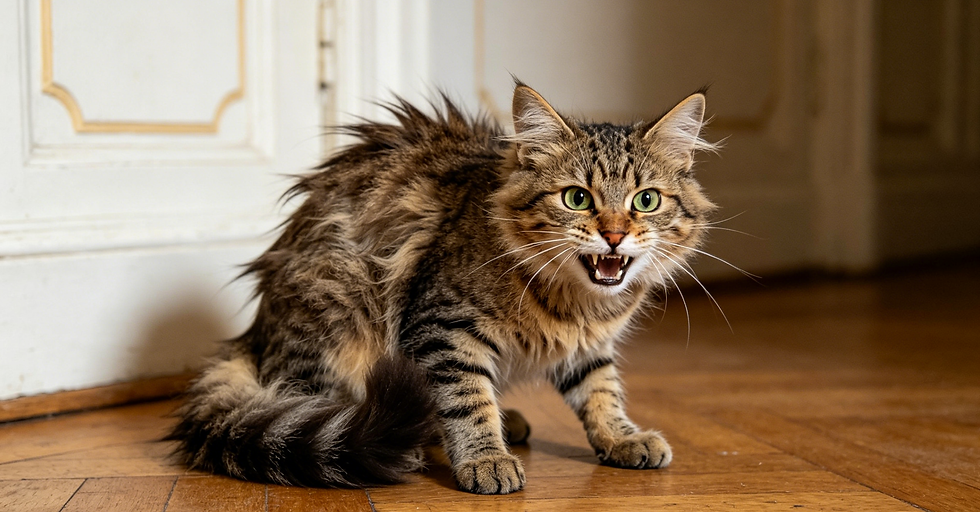
Cat Tail Language Decoded: Understand Every Tail Signal
DONALD LEE WARNICK | Updated on 04/10/26
Introduction
Cats are masters of subtle communication. While they meow, purr, and use their eyes and ears, one of the clearest windows into their emotions is their tail. A cat’s tail can signal friendliness, confidence, irritation, fear, or playfulness in a single movement or position. Learning to read these signals helps you understand your cat better, avoid misunderstandings, and strengthen your bond.
I used to think a moving tail always meant a cat was annoyed. After living with cats for years, I realized the truth is far more nuanced. The height, shape, speed, and context of the tail all matter. A high, upright tail can mean a happy greeting, while the same tail held low or puffed up can signal stress or fear. This guide breaks down the most common cat tail positions and movements so you can interpret them accurately in everyday life.
This article is based on commonly observed feline behavior and publicly available educational resources from reputable animal welfare organizations. It is for educational purposes only and is not a substitute for professional veterinary or behavioral advice.
Why Cat Tail Language Matters
Unlike dogs, cats often communicate more quietly and with finer body signals. Their tails are highly expressive and serve multiple purposes: balance, scent marking, and emotional communication. By watching the tail along with the rest of the body (ears, eyes, posture, and whiskers), you get a much clearer picture of how your cat is feeling.
Understanding these signals can help you:
-
Know when your cat wants interaction or prefers space
-
Spot early signs of stress or discomfort
-
Respond appropriately during play, introductions, or veterinary visits
-
Build greater trust over time
The Most Common Cat Tail Positions and What They Mean
1. Tail Straight Up (Upright Tail)
When a cat holds its tail straight up like a flagpole, it is usually one of the friendliest signals you will see. This position often appears when a cat approaches you, another familiar cat, or a favored person. It is a confident, social greeting that says “I’m happy to see you” or “I feel safe and open to interaction.”
You will frequently notice this when your cat walks into a room and heads straight toward you with the tail held high. Kittens also use this signal when greeting their mothers. In multi-cat households, an upright tail during approach usually indicates peaceful intentions.
Tip: This is generally a good time to offer gentle pets or engage in interaction, especially if the rest of the body looks relaxed.
2. Tail with a Question-Mark or Hooked Tip
A variation of the upright tail is one that curves at the tip, resembling a question mark or a gentle hook. This is another positive signal. It often means the cat is friendly, content, and possibly in a playful mood. Many cats use this shape when they are curious or inviting interaction without being overly intense.
This position is common during relaxed moments around the house or when a cat is deciding whether to approach something interesting.
3. Tail Wrapped Around You or Another Cat
When a cat wraps its tail around your leg, arm, or another cat’s body, it is a clear sign of affection and social bonding. Cats have scent glands along their tails, so this gesture also helps exchange familiar scents. It is similar to a human putting an arm around someone they care about.
You may see this during quiet moments on the couch or when your cat is feeling particularly close to you. It is one of the warmest forms of feline body language.
4. Low or Horizontal Tail
A tail held low or roughly level with the back can have several meanings depending on context. In a relaxed cat, it may simply be a neutral resting position. However, if the tail is held lower than usual and the body looks tense, it can indicate caution, uncertainty, or mild anxiety.
Watch the rest of the body: soft eyes and loose posture usually mean the cat is calm, while flattened ears or a stiff body suggest the cat is evaluating a situation carefully.
5. Tail Tucked Between the Legs or Tightly Against the Body
A tightly tucked tail is one of the clearest signs of fear, anxiety, or submission. The cat is trying to make itself look smaller and protect vulnerable areas. This signal often appears during loud noises, unfamiliar visitors, trips to the veterinarian, or tense encounters with other animals.
If the tucked tail is accompanied by crouching, dilated pupils, or attempts to hide, the cat is likely feeling significantly stressed. Give space, reduce the trigger if possible, and avoid forcing interaction.
6. Puffed-Up or Bottle-Brush Tail
When a cat’s tail suddenly becomes large and puffed (often called a bottle-brush tail), the hair is standing on end due to piloerection. This is a defensive response meant to make the cat look bigger and more intimidating. It commonly occurs when a cat is startled, frightened, or feeling threatened.
You may see this during a sudden loud noise, an unexpected encounter with another animal, or when the cat feels cornered. The back is often arched at the same time. This is a clear signal to give the cat space and let it calm down.
7. Twitching, Flicking, or Thrashing Tail
Tail movement is just as important as position.
-
Gentle, slow swishing from side to side often means the cat is focused or mildly interested, such as when watching a bird or preparing to pounce on a toy.
-
Faster twitching or flicking at the tip can signal irritation or rising frustration. Many cats do this when they have had enough petting.
-
Strong thrashing or whipping of the entire tail is usually a warning of stronger negative emotion—anger, overstimulation, or fear. It is wise to stop interacting and give the cat room.
Learning the difference between a playful swish and an irritated thrash helps prevent scratches or bites during play or petting sessions.
How to Read the Full Picture
A single tail signal rarely tells the whole story. Always consider the complete body language and the situation:
-
Ears: Forward and relaxed vs. flattened or sideways
-
Eyes: Soft and blinking vs. wide with dilated pupils
-
Body posture: Loose and upright vs. crouched or arched
-
Whiskers: Neutral vs. pulled back
-
Context: Is the cat in a familiar space or facing something new?
For example, an upright tail with soft eyes and a relaxed body is a friendly invitation. The same upright tail combined with a stiff body and intense stare may indicate high arousal that could tip into irritation.

Practical Tips for Everyday Life
-
Respect the signals. If the tail starts thrashing or tucking, pause interaction.
-
Create positive associations. Pair calm, upright-tail moments with gentle praise or a favorite treat.
-
Watch during introductions. When bringing a new person, pet, or object into the home, monitor tail language closely.
-
Note individual differences. Some cats are more expressive with their tails than others. Learn your own cat’s baseline.
-
Consider health. A sudden change in normal tail carriage (especially if the tail is held oddly or the cat seems painful) may warrant a veterinary check.
Common Mistakes Owners Make
-
Assuming every moving tail means anger
-
Ignoring a tucked or puffed tail and continuing to approach
-
Comparing one cat’s signals directly to another without considering personality and breed differences
-
Focusing only on the tail while missing ears, eyes, and posture
Avoiding these mistakes makes daily interactions smoother and reduces stress for both of you.
Building a Better Relationship Through Observation
Once you start consistently noticing your cat’s tail language, small everyday moments become clearer. You will recognize the happy upright tail when you come home, the gentle question-mark curve during play invitations, and the early warning flick that says “I’ve had enough pets for now.”
Over time, responding appropriately to these signals builds trust. Your cat learns that you understand its communication, and you become better at meeting its needs for interaction, space, or reassurance.
When to Seek Professional Help
Most tail signals are normal communication. However, contact a veterinarian if:
-
The tail position changes suddenly and stays abnormal
-
The cat shows signs of pain when the tail is touched
-
There is trauma to the tail
-
Behavioral changes (hiding, aggression, litter box issues) accompany unusual tail signals
A veterinary behaviorist can also help with chronic anxiety or inter-cat tension.
Final Thoughts
A cat’s tail is a remarkably expressive tool. From the confident upright greeting to the defensive puffed bottle-brush and the affectionate wrap around your leg, each position and movement carries meaning. By learning to read these signals in context, you gain deeper insight into your cat’s emotional world.
The more carefully you observe, the stronger and more respectful your relationship becomes. Cats may not speak our language, but they are constantly communicating. Slowing down to understand their tail language is one of the simplest and most rewarding ways to listen.
FAQ
1. Does a wagging tail always mean my dog is happy?
No. A wagging tail means your dog is emotionally engaged, but the emotion could be excitement, uncertainty, nervousness, or happiness.
2. Why does my dog wag their tail when they are nervous?
Dogs may wag their tails during many emotional situations. The rest of the body language helps explain whether they feel comfortable or unsure.
3. Why does my dog tuck their tail between their legs?
A tucked tail often means a dog feels nervous, uncomfortable, or afraid. It is usually a signal that they need space or reassurance.
4. Why is my dog’s tail stiff?
A stiff tail often means your dog is focused on something. Look at other signals to understand whether they are curious or uncomfortable.
5. Do all dogs use their tails the same way?
No. Breed, tail shape, personality, and normal habits can affect how dogs communicate.
6. How can I better understand my dog’s tail language?
Spend time observing your dog during different situations. Learn what their relaxed, excited, and uncomfortable behaviors look like.
References
-
American Kennel Club (AKC). Understanding Dog Body Language
https://www.akc.org/
(Note: While focused on dogs, general body language principles overlap; primary feline sources below are preferred.) -
ASPCA. Cat Behavior Tips & Body Language
https://www.aspca.org/pet-care/cat-care -
International Cat Care. Understanding Your Cat’s Body Language
https://icatcare.org/ -
RSPCA. Understanding Cat Behaviour
https://www.rspca.org.uk/ -
VCA Animal Hospitals. Feline Body Language
https://vcahospitals.com/know-your-pet -
American Humane. Understanding Your Cat’s Behavior
https://www.americanhumane.org/ -
PetMD. How to Read Your Cat’s Tail Language
https://www.petmd.com/cat/behavior/cat-tail-language
Disclaimer:
This article is based on personal experience as a dog owner and general information about canine body language. It is intended for educational purposes only and does not replace veterinary diagnosis, treatment, or professional behavioral advice.


You might like


Donald is a pet care writer and office worker with 5 years of hands-on experience caring for cats and dogs, balancing a busy 9-to-5 schedule with pet parenthood.
Each of his articles draws from real-life wins and learning moments, answering questions busy pet parents face: how to keep pets happy and healthy without extra stress, simple daily habits, budget-friendly tips, and solutions for common issues like picky eating or late-night troubleshooting.


Related Articles