What is this about a race in the middle of the night?
DONALD LEE WARNICK | Updated on 04/10/26
Introduction
If you have ever been woken up by the sound of your cat running across the house at midnight, you are definitely not alone.
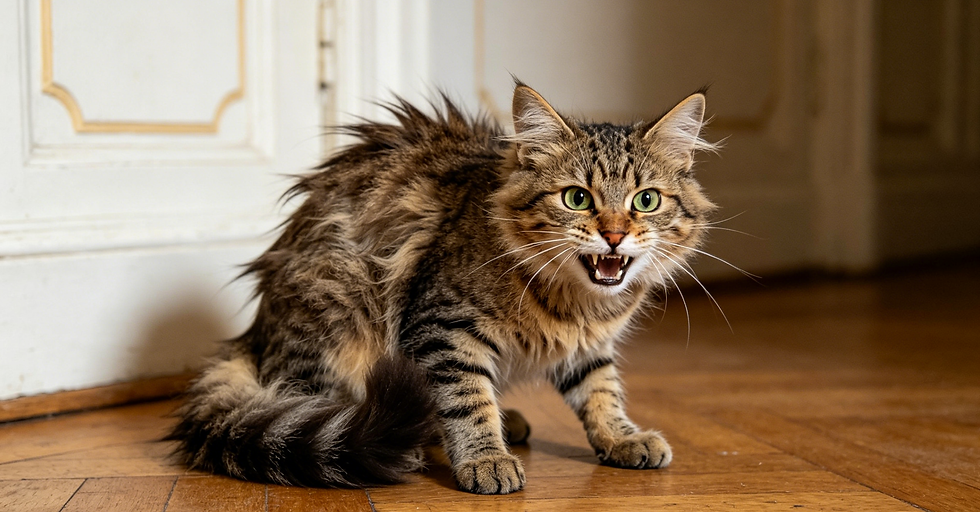
One moment, everything is quiet. The next moment, you hear paws racing across the floor, furniture moving, toys rolling around, and your cat jumping from one side of the room to another like they are preparing for a very important mission.
Many cat owners call this behavior the “midnight zoomies.”
At first, it can seem completely random.
You may wonder:
“Why is my cat suddenly full of energy when everyone else is trying to sleep?”
When I first became a cat owner, this behavior surprised me too.
During the day, my cat was usually calm. He spent a lot of time sleeping near the window, grooming himself, or quietly watching what was happening around the house.
But late at night, his personality seemed to completely change.
Around midnight, he would suddenly run through the hallway, jump onto the sofa, chase imaginary targets, and play with toys that he ignored earlier in the day.
At first, I thought something was wrong.
Later, after paying closer attention, I realized this was simply part of his natural behavior.
Cats have their own activity patterns, and many of their energetic moments happen when humans are preparing to rest.
This article is based on my personal experience as a cat owner and general information about feline behavior. It is written for everyday education and understanding. It is not a replacement for veterinary diagnosis, treatment, or professional behavioral advice.

Quick Answer
The “race in the middle of the night” is commonly known as cat zoomies or feline activity bursts.
Cats may suddenly run, jump, or play at night because of their natural hunting instincts, stored energy, boredom, changes in routine, or their normal active periods.
While nighttime zoomies can sometimes interrupt sleep, they are usually a normal part of cat behavior.
Understanding why they happen can help owners create better routines and make nighttime more peaceful.
Why Do Cats Run Around at Night?
Cats may suddenly become energetic at night for several natural reasons.
1. Cats Have Natural Hunting Instincts
One of the biggest reasons cats experience nighttime energy bursts is connected to their natural hunting behavior.
Even though indoor cats no longer need to hunt for survival, they still have many instincts from their wild ancestors.
Cats are naturally designed to:
-
Observe movement
-
Chase objects
-
Practice stalking
-
React quickly
In nature, many cats are most active during dawn and dusk.
These periods are called crepuscular hours, when many small animals are active and hunting opportunities increase.
Indoor cats may adjust their schedule depending on their household environment, but some still experience strong bursts of energy during evening or nighttime hours.
My cat often becomes more active after the house becomes quiet.
During the day, there are many distractions.
People are walking around, sounds are happening, and there are many things to observe.
But at night, when everything slows down, he seems to suddenly remember:
“Now is the perfect time to play.”
2. Your Cat May Have Too Much Unused Energy
Another common reason for midnight zoomies is simply having extra energy.
Many indoor cats spend a large part of the day sleeping.
This is normal.
Cats are naturally good at conserving energy.
However, if a cat sleeps for many hours without enough physical or mental stimulation, they may release that stored energy later.
This can happen through:
-
Running around the house
-
Jumping on furniture
-
Chasing toys
-
Playing with random objects
I noticed this pattern with my own cat.
On days when we had more interactive playtime in the evening, his nighttime running was usually shorter.
On quieter days when he spent more time sleeping, he seemed much more energetic after everyone went to bed.
That helped me understand that his nighttime activity was not random.
He simply had energy that needed an outlet.
3. Evening Play Can Trigger More Activity
Many cats become excited after play sessions.
Sometimes owners expect playtime to make cats tired immediately.
However, play can actually activate their hunting instincts first.
A typical cat play cycle looks something like:
-
Notice movement
-
Chase
-
Catch
-
Explore
-
Relax
If a cat does not have a chance to complete this cycle, they may continue looking for stimulation.
This is why many owners find evening play helpful.
A short interactive session before bedtime can give cats a chance to use their energy in a positive way.
For example:
-
Wand toys
-
Chase toys
-
Puzzle feeders
-
Short training games
The goal is not exhausting your cat completely.
It is helping them use their natural instincts in a healthy way.
4. Cats May Be Responding to a Quiet Environment
Another interesting thing about nighttime zoomies is that cats often become more confident when the environment is calm.
During the day, your cat may be busy watching everything around them.
At night:
-
There are fewer noises
-
Fewer people are moving
-
Fewer distractions exist
This can create the perfect environment for exploration.
My cat sometimes waits until everyone is sitting down before starting his “night performance.”
He runs through rooms that he normally ignores during the day.
It almost feels like he has his own schedule that begins when ours ends.
5. Younger Cats Usually Have More Intense Zoomies
Age can also influence how often cats run around at night.
Kittens and young cats usually have much higher energy levels.
They are still learning about their environment and developing their physical skills.
A kitten may spend a lot of time:
-
Jumping
-
Climbing
-
Chasing
-
Exploring
Adult cats often become calmer, although many still enjoy occasional bursts of energy.
Senior cats usually have lower activity levels, but they can still have playful moments.
Every cat develops differently.
A playful adult cat is not necessarily unusual.
Owner Observations: Learning My Cat’s Nighttime Habits
One thing I have learned from living with a cat is that their behavior often makes more sense when you pay attention to patterns.
At first, my cat’s nighttime running seemed completely unpredictable.
Some nights he would sleep quietly until morning.
Other nights, around midnight, he suddenly became full of energy.
He would run down the hallway, jump onto the couch, chase a small toy, and then act like nothing happened five minutes later.
Instead of seeing it as a problem, I started observing what happened before these energy bursts.
I noticed a few patterns:
-
He was more active after quiet days with less play.
-
He became excited after seeing movement outside the window.
-
He often played after eating dinner and resting for a while.
-
His energy usually appeared when the house became calm.
These observations helped me understand that my cat was not “being difficult.”
He was simply following his natural rhythm.
Many cat owners have similar experiences.
A cat that spends the afternoon sleeping may suddenly transform into an energetic runner once the lights go off.

Real Cases From Other Cat Owners
A friend of mine shared a similar experience with her young Bengal cat, Rocket.
During the first few months after adoption, Rocket would suddenly run across the apartment every night around 2 a.m.
He jumped onto shelves, chased toys, and even played with objects that were completely ignored during the day.
At first, she worried that he was stressed or unhappy.
After creating a more consistent evening routine with interactive play and puzzle toys, she noticed that Rocket became calmer at night.
He still had occasional zoomies, but they were shorter and easier to manage.
Another cat owner I know had an older indoor cat that started having short bursts of nighttime activity.
Instead of assuming the cat was simply “acting strange,” the owner paid attention to other changes.
They noticed that the cat was still eating normally, using the litter box normally, and enjoying daily interactions.
The nighttime running appeared to simply be part of the cat’s personality.
These examples show why understanding the whole situation matters.
A single behavior rarely tells the complete story.
Real Scenario: The Midnight Race in My House
There are nights when I am almost asleep, and suddenly I hear the familiar sound:
Tap. Tap. Tap.
Small paws running across the floor.
Then comes the jump onto the sofa.
Then another sprint through the hallway.
For a moment, it feels like my cat has decided that midnight is the perfect time for a competition.
At first, I would get up and try to stop him.
But I quickly realized that reacting with attention sometimes made the behavior even more exciting.
To him, my reaction became part of the game.
Instead, I started adjusting his routine earlier in the evening.
A short play session before bedtime, followed by a calm environment, helped him settle more easily.
I also made sure he had toys and activities available during the day.
Over time, the nighttime races became less frequent.
The goal was not to completely change his personality.
It was simply helping him use his energy at a better time.
When Should You Pay Attention to Nighttime Running?
Most nighttime zoomies are harmless and normal.
However, owners should pay attention if the behavior appears together with other unusual changes.
Things worth noticing include:
-
Sudden increase in nighttime activity in an older cat
-
Signs of confusion or unusual behavior
-
Changes in eating habits
-
Increased vocalization
-
Changes in litter box use
-
Signs of discomfort or difficulty moving
A playful cat running around is very different from a cat whose entire behavior pattern has suddenly changed.
The most important thing is knowing what is normal for your own cat.
A young cat that runs around every evening may simply be energetic.
An older cat that suddenly becomes restless at night may need closer observation.
How to Reduce Midnight Zoomies
You may not be able to completely eliminate nighttime energy bursts, and you probably do not need to.
Cats are naturally active animals.
However, you can make nighttime behavior easier to manage.
1. Add Interactive Play Before Bed
One of the most helpful changes I made was adding a short play session in the evening.
You do not need hours of activity.
Even 10–15 minutes of focused play can give your cat a chance to chase, jump, and use their hunting instincts.
Good options include:
-
Wand toys
-
Moving toys
-
Chase games
-
Treat puzzles
The important part is allowing your cat to actively participate.
2. Create a Predictable Routine
Cats often feel more comfortable when they know what happens next.
A simple routine may include:
-
Evening play
-
Dinner
-
Quiet time
-
Sleeping area preparation
My cat seems calmer when his evenings follow a familiar pattern.
Cats are creatures of habit, and consistency can make daily life easier for them.
3. Provide Daytime Enrichment
A cat that sleeps all day may have more energy at night.
Providing activities during the day can help.
Examples include:
-
Window watching areas
-
Scratching posts
-
Puzzle feeders
-
Rotating toys
-
Climbing spaces
The goal is giving your cat opportunities to explore and think.
Mental stimulation can be just as important as physical activity.
4. Avoid Rewarding Unwanted Nighttime Behavior
This was something I had to learn.
When my cat ran around at night, I sometimes talked to him or got up to check what he was doing.
To my cat, this was attention.
Even negative attention can sometimes encourage a behavior.
If your cat is safely playing and not causing problems, ignoring the behavior may work better than turning it into an interaction.
Conclusion
The mysterious “race in the middle of the night” is one of the many interesting behaviors that make cats unique.
Those sudden sprints, jumps, and playful moments may seem strange to us, but they are often connected to natural instincts, energy levels, and daily routines.
Learning why cats experience nighttime zoomies helped me become a more patient owner.
Instead of seeing my cat’s midnight running as a bad habit, I now see it as a reminder that cats have their own schedules and personalities.
Every cat communicates differently.
Some cats show excitement through play.
Some show affection through quiet companionship.
Some express their energy through a late-night adventure around the house.
The more we observe our cats, the easier it becomes to understand them.
A little patience, a consistent routine, and some extra playtime can help create a happier environment for both cats and their owners.
References
-
International Cat Care – Cat Behavior and Activity Patterns
https://icatcare.org/ -
American Society for the Prevention of Cruelty to Animals (ASPCA) – Cat Care and Behavior Resources
https://www.aspca.org/pet-care/cat-care -
American Association of Feline Practitioners (AAFP) – Feline Behavior Information
https://catvets.com/ -
The Humane Society of the United States – Cat Care Guide
https://www.humanesociety.org/resources/cat-care -
Cornell Feline Health Center – Understanding Cat Behavior
https://www.vet.cornell.edu/departments-centers-and-institutes/cornell-feline-health-center
FAQ
-
Why does my cat only race at night?
Cats are crepuscular animals. Their internal clock makes them most active during low-light hours when hunting would naturally occur. -
Are zoomies a sign that my cat is unhappy?
Usually not. In most cases, they indicate normal, healthy energy that needs an outlet rather than unhappiness. -
How can I stop my cat from waking me up with zoomies?
Tire your cat out before bed, feed a late meal, and ignore attention-seeking behavior. Consistency is key. -
Do all cats experience nighttime races?
Most cats do, especially younger ones and indoor cats, though some are naturally calmer. -
Can too many zoomies be harmful?
Excessive running is rarely harmful for young cats, but older cats may risk injury from jumping if they have joint problems.
Related Articles



Donald is a pet care writer and office worker with 5 years of hands-on experience caring for cats and dogs, balancing a busy 9-to-5 schedule with pet parenthood.
Each of his articles draws from real-life wins and learning moments, answering questions busy pet parents face: how to keep pets happy and healthy without extra stress, simple daily habits, budget-friendly tips, and solutions for common issues like picky eating or late-night troubleshooting.