Stress Behaviors in Cats: Read Your Cat's Signals
DONALD LEE WARNICK | Updated on 04/10/26
Introduction
Cats are often described as independent animals, and in many ways, that is true.
They enjoy having their own space, making their own choices, and deciding when they want attention.
But because cats are naturally good at hiding emotions, it can sometimes be difficult for owners to notice when something is bothering them.
Unlike dogs, many cats do not show stress in obvious ways.
A stressed dog may bark, become restless, or clearly seek attention. A stressed cat may simply hide under the bed, sleep more than usual, or quietly change their daily habits.
When I first became a cat owner, I thought I would easily understand my cat’s feelings.
I quickly realized that cats communicate in much smaller ways.
My cat does not come to me and show that something is wrong. Instead, I notice small changes.
Maybe he spends less time sitting in his favorite spot.
Maybe he does not greet me at the door like usual.
Maybe he suddenly becomes more interested in hiding.
At first, these small changes were easy to miss.
Over time, I learned that understanding my cat was less about expecting obvious signals and more about paying attention to his normal behavior.
Every cat has its own personality.
Some cats are naturally shy.
Some are very social.
Some enjoy being handled, while others prefer more personal space.
The most useful thing an owner can do is learn what is normal for their own cat and notice when something changes.
This article is based on my personal experience as a cat owner and general information about feline behavior. It is written for everyday understanding and is not a replacement for veterinary diagnosis, treatment, or professional behavioral advice.
Why Cats Hide Stress So Well
Cats are both predators and prey animals in nature.
Because of this, showing weakness can make them feel vulnerable.
Many cats instinctively hide signs of discomfort or stress.
This behavior helped their wild ancestors survive, but it can make things challenging for modern cat owners.
A cat may not always show stress through obvious actions.
Instead, stress may appear as small changes:
-
Sleeping in different places
-
Eating differently
-
Grooming more or less
-
Avoiding certain areas
-
Becoming unusually quiet
-
Changing litter box habits
One important lesson I learned is that a single behavior does not always tell the whole
story.
For example, my cat sometimes hides after hearing loud noises.
That alone is not unusual.
But if hiding becomes frequent and happens together with other changes, then it becomes something worth paying attention to.
Understanding patterns is often more helpful than focusing on one moment.
Common Signs of Stress in Cats
1. Hiding More Than Usual
One of the most common stress signals in cats is increased hiding.
Cats naturally enjoy quiet places, so occasional hiding is completely normal.
Many cats have favorite spots where they sleep or relax.
The difference is a sudden change.
If a normally social cat suddenly spends most of the day under furniture or avoids family members, it may be a sign that something has changed.
I noticed this when my cat experienced a major change in his environment.
During the first few days, he spent much more time in a quiet corner instead of his usual sleeping area.
I did not force him to come out.
Instead, I gave him time and kept his routine consistent.
After he felt more comfortable, he slowly returned to his normal habits.
That experience taught me that cats often need time to adjust.
2. Changes in Eating Habits
Food is another area where stress can sometimes appear.
Some cats may eat less when they feel uncomfortable.
Others may eat differently because of changes in their environment or routine.
As an owner, I pay attention to my cat’s normal eating pattern.
I know when he usually eats, how excited he gets about meals, and what his normal
behavior looks like afterward.
A small change for one day may not mean much.
But a noticeable change that continues is something worth noticing.
Cats often communicate through routines.
When a routine changes, it can tell us something.
3. Excessive Grooming
Cats are naturally clean animals.
Regular grooming is a normal part of their daily behavior.
However, some cats may groom themselves more frequently when they feel stressed.
You may notice:
-
Repeated licking
-
Spending unusually long periods grooming
-
Focusing on one specific area
When my cat is nervous after hearing unfamiliar sounds, I sometimes notice that he becomes more focused on cleaning himself.
It is almost like grooming helps him calm down.
This reminded me that cats have their own ways of dealing with emotions.
4. Avoiding Human Interaction
A cat that suddenly avoids people may be experiencing stress.
For example, a normally affectionate cat may:
-
Stop sitting near you
-
Avoid being touched
-
Walk away when approached
This does not always mean the cat is angry or no longer likes you.
Sometimes they simply need more space.
One mistake I made early on was trying too hard to comfort my cat when he seemed nervous.
wanted to help, but my attention actually made him more uncomfortable.
Later, I learned that giving him space was sometimes the best way to show care.
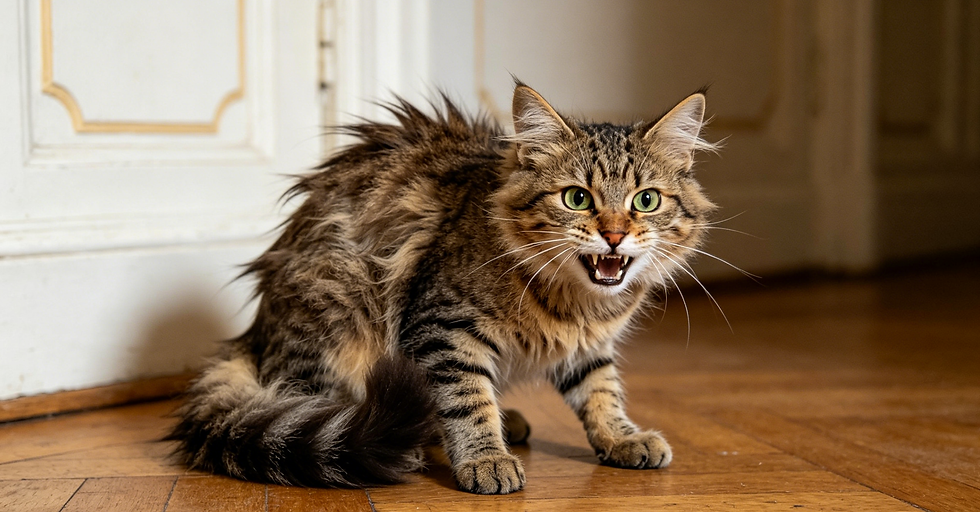
5. Aggressive Behavior Can Be a Stress Signal
Many owners are surprised when a normally gentle cat suddenly becomes defensive.
A cat that hisses, swats, scratches, or avoids being touched is not always trying to be aggressive.
Sometimes, these behaviors are a response to feeling stressed, scared, or overwhelmed.
Cats often use these actions to create distance when they feel uncomfortable.
For example, a cat may become defensive because of:
-
A new person in the home
-
Another pet changing the household dynamic
-
Loud noises
-
Changes in daily routines
-
Feeling trapped or unable to escape
I experienced this when my cat reacted differently after a change in his environment.
He was usually calm, but he became more sensitive when approached too quickly.
At first, I thought he was simply being difficult.
Later, I realized he was communicating:
“I need more space right now.”
Instead of forcing interaction, I gave him time and allowed him to come to me.
After a while, his normal personality returned.
That experience helped me understand that many unwanted behaviors are actually communication.
6. Changes in Body Language
Cats are constantly communicating through their bodies.
Learning these small signals can help owners understand their emotions better.
Some common stress-related body language signs include:
Flattened Ears
When a cat presses their ears backward or sideways, it may indicate discomfort, fear, or irritation.
For example, my cat sometimes does this when he hears unfamiliar sounds outside.
His ears change before anything else happens.
It is a small warning that he is paying close attention.
Tail Changes
A cat’s tail can reveal a lot about their emotional state.
Some signs include:
-
Tail held low
-
Tail tucked close to the body
-
Rapid tail movement
-
Stiff tail position
A relaxed cat usually has a relaxed body and natural tail movement.
A tense tail combined with other stress signals may mean the cat needs space.
Dilated Eyes
Cats’ eyes can change depending on lighting, excitement, and emotions.
Large pupils alone do not always mean stress.
However, when combined with a tense body, flattened ears, or avoiding behavior, it may
indicate that the cat feels uncomfortable.
Crouched Body Position
A stressed cat may make their body appear smaller.
They may:
-
Lower their body close to the ground
-
Keep their muscles tense
-
Avoid movement
This is often different from a relaxed cat simply resting.
Learning your own cat’s normal resting positions makes these differences easier to notice.
7. Changes in Litter Box Habits
Litter box changes are another important behavior owners should pay attention to.
A cat that suddenly stops using the litter box normally may be reacting to:
-
Environmental stress
-
Changes in routine
-
Problems with the litter setup
-
Other factors affecting their comfort
Cats are creatures of habit.
Even small changes, such as moving furniture, changing litter types, or introducing new smells, may affect some cats.
I learned that cats often prefer consistency.
Something that seems small to us can feel like a major change from their perspective.
Keeping feeding times, play routines, and important areas predictable can help many cats feel more secure.
My Experience Learning to Read My Cat’s Signals
Living with a cat has taught me that communication does not always look obvious.
Dogs often show excitement openly.
Cats are different.
Their signals are quieter.
My cat has taught me to notice small details:
-
Where he chooses to sleep
-
How he approaches people
-
Whether he wants attention
-
How his body changes in new situations
The biggest lesson has been patience.
I used to think being a good owner meant always trying to interact.
Now I understand that sometimes the best way to care for a cat is simply giving them the space to feel safe.
Respecting their boundaries builds trust.
You might like


How to Help a Stressed Cat Feel More Comfortable


When a cat is stressed, the best solution is usually not forcing them to interact.
Instead, focus on creating a safe and predictable environment.
Here are some things that helped me:
1. Maintain a Consistent Routine
Cats often feel more comfortable when they know what to expect.
Try keeping regular times for:
-
Feeding
-
Play
-
Rest
-
Interaction
My cat seems much more relaxed when his daily routine stays familiar.
2. Provide Safe Spaces
Cats need places
This can include:
-
A quiet corner
-
A cat bed
-
A high shelf
-
A covered hiding spot
A safe space allows cats to relax without feeling pressured.
3. Let Your Cat Choose Interaction
One important lesson I learned is that cats appreciate having control.
Instead of always picking up my cat or calling him over, I started waiting for him to approach.
This small change improved our relationship.
He became more willing to spend time near me because he knew he could leave whenever he wanted.
4. Keep Environmental Changes Slow
Cats often need time to adjust.
If you are introducing:
-
A new pet
-
New furniture
-
A new home
-
Changes in household activity
Try making changes gradually when possible.
A slower transition can make the experience less overwhelming.
Common Mistakes Owners Make When Cats Are Stressed
Mistake 1: Forcing Interaction
Many owners want to comfort their cat by holding them or bringing them closer.
However, some cats need space first.
Giving them control can actually help them feel safer.
Mistake 2: Punishing Stress Behaviors
Hiding, hissing, or avoiding contact are usually ways cats communicate discomfort.
Punishing these behaviors can increase fear and make the situation worse.
Understanding the reason behind the behavior is more helpful.
Mistake 3: Ignoring Small Changes
A major mistake is waiting until behavior becomes extreme.
Small changes often appear first.
A cat that sleeps somewhere different, eats less enthusiastically, or becomes quieter may already be showing that something has changed.
My Experience Learning to Read My Cat’s Signals
Living with a cat has taught me that communication does not always look obvious.
Dogs often show excitement openly.
Cats are different.
Their signals are quieter.
My cat has taught me to notice small details:
-
Where he chooses to sleep
-
How he approaches people
-
Whether he wants attention
-
How his body changes in new situations
The biggest lesson has been patience.
I used to think being a good owner meant always trying to interact.
Now I understand that sometimes the best way to care for a cat is simply giving them the space to feel safe.
Respecting their boundaries builds trust.
Conclusion
Cats may not express stress in obvious ways, but they are always communicating.
A change in behavior, body language, or daily routine can be a small message from your cat.
Learning these signals does not mean you need to analyze every movement.
It simply means becoming more familiar with your own pet.
Every cat has a unique personality.
Some are confident and social.
Others are quiet and cautious.
The most important thing is understanding what is normal for your cat and noticing when something changes.
For me, learning my cat’s signals has made our relationship stronger.
I no longer see hiding, quiet moments, or changes in behavior as random actions.
I see them as communication.
And once we learn how to listen, cats often tell us much more than we realize.
References
-
International Cat Care – Cat Behavior and Stress Information
https://icatcare.org/ -
American Society for the Prevention of Cruelty to Animals (ASPCA) – Cat Behavior Resources
https://www.aspca.org/pet-care/cat-care -
American Association of Feline Practitioners (AAFP) – Feline Behavior Information
https://catvets.com/ -
Cornell Feline Health Center – Cat Behavior and Health Resources
https://www.vet.cornell.edu/departments-centers-and-institutes/cornell-feline-health-center -
The Humane Society of the United States – Cat Care Guide
https://www.humanesociety.org/resources/cat-care
FAQ
-
Can stress make my cat sick?
Yes. Chronic stress can weaken the immune system and contribute to urinary tract issues (such as FLUTD), digestive problems, and over-grooming that leads to skin infections.
-
How do I reduce stress when moving house?
Prepare a quiet “safe room” with familiar bedding, toys, litter box, and food. Introduce the rest of the home gradually over several days while using calming pheromones.
-
Is hiding always a sign of stress?
Not always. Short periods of hiding can be normal, but prolonged hiding, especially with other changes like reduced appetite, usually indicates stress.
-
Do synthetic pheromones really help?
Many cats respond positively to products like Feliway. They mimic calming facial pheromones and can reduce anxiety in stressful situations.
-
When should I consult a veterinarian or behaviorist?
Seek professional help if stress behaviors last more than a few days, include aggression, litter box avoidance, significant appetite changes, or self-injury from over-grooming.
Related Articles


Donald is a pet care writer and office worker with 5 years of hands-on experience caring for cats and dogs, balancing a busy 9-to-5 schedule with pet parenthood.
Each of his articles draws from real-life wins and learning moments, answering questions busy pet parents face: how to keep pets happy and healthy without extra stress, simple daily habits, budget-friendly tips, and solutions for common issues like picky eating or late-night troubleshooting.