Why Does My Dog Lick Me So Much?
DONALD LEE WARNICK | Updated on 04/10/26
Why Does My Dog Lick Me So Much?
Have you ever wondered why your dog loves licking you so much? For many dog owners, this is one of the most familiar behaviors we experience every day. Some dogs lick your hands when you sit down, some lick your face when you come home, and others seem determined to give you endless “kisses” whenever they get the chance.
When I first became a dog owner, I honestly thought my dog was simply being affectionate. Every time I walked through the door, he would run over, wag his tail, and immediately start licking my hands. If I sat on the floor with him, he would often move closer and try to lick my face.
At first, I found it funny and sweet. It felt like his own way of saying hello.
Over time, though, I started noticing that licking could happen in many different situations. Sometimes he licked me when he was excited. Sometimes he did it when I was sitting quietly. Other times, he seemed interested in licking after I had been outside or after exercising.
That made me realize that dogs lick for many different reasons. While affection is often part of it, licking can also be connected to curiosity, communication, attention-seeking, and their natural instincts.
Learning why dogs lick has helped me understand my own dog better and has also helped me recognize when the behavior is simply part of his personality and when it may be a sign that something has changed.
This article is based on my personal experience as a dog owner and commonly observed canine behaviors. It is written for general educational purposes and is not a replacement for professional veterinary diagnosis or individualized behavior advice.

Licking Is Often a Sign of Affection
For many dogs, licking is part of the way they build relationships.
Dogs do not communicate with humans the same way people communicate with each other. They cannot tell us they missed us, that they feel happy, or that they want attention. Instead, they use body language, sounds, and physical interaction.
For my Labrador, licking is one of his favorite ways to connect with people.
Whenever family members visit, he usually gets excited. He brings toys, follows them around the house, and often tries to give them a few enthusiastic licks. Everyone in my family has noticed that this is simply part of his personality.
Some dogs are naturally more affectionate than others. One dog may show love by leaning against you, another may bring you toys, and another may prefer staying nearby. Licking is just one of the many ways dogs express social connection.
Dogs also learn from experience. If licking receives attention, smiles, talking, or physical contact, many dogs quickly understand that this behavior creates interaction.
From their perspective, licking may become a successful way to communicate:
“I want to be close to you.”
“I’m happy you are here.”
“Please pay attention to me.”
Sometimes They're Just Curious
One thing that surprised me after living with a dog was discovering how much information they gather through their mouths and noses.
Humans usually explore the world mainly through sight, but dogs experience their surroundings through smell, taste, and touch.
I remember coming home after gardening one afternoon. My dog immediately walked over and started sniffing my hands. After a few seconds, he began licking them.
At first, I thought he was just being affectionate. But then I realized my hands probably carried many interesting smells from outside.
Dogs are naturally curious animals. They investigate new scents, objects, and changes in their environment constantly.
Your dog may lick you because:
-
You smell different after being outside
-
You touched food
-
You have interesting scents on your skin
-
They are exploring something unfamiliar
To us, licking may seem random, but for dogs it can be another way of collecting information.
Your Skin Might Taste Good
Another simple reason dogs lick people is because our skin can have interesting tastes and smells.
After exercise, for example, some dogs become especially interested in licking areas like hands, arms, or legs.
I noticed this with my own dog after walks on warm summer days. If I came home after sweating slightly, he would often sniff my hands and try to lick them more than usual.
Human skin naturally contains salt, oils, and different scents that dogs can notice much more strongly than we can.
Of course, dogs are not thinking about taste the same way humans do. For them, these small details are part of understanding the world around them.
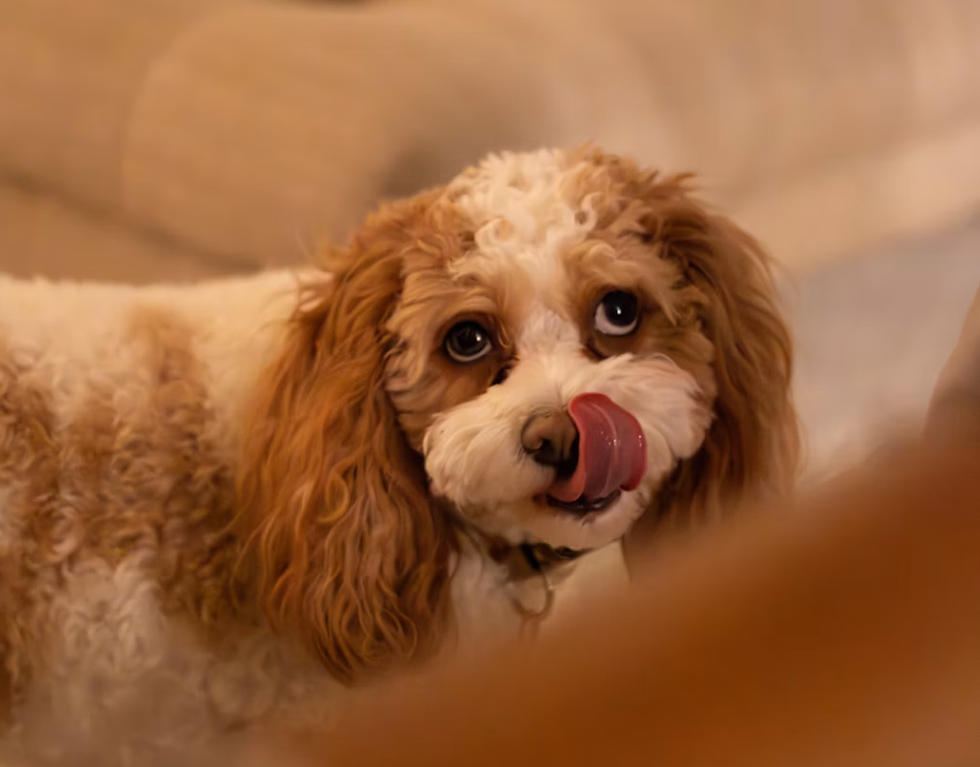
Dogs Learn What Gets Your Attention
One of the biggest reasons dogs continue licking is surprisingly simple: it works.
Dogs are excellent observers. They quickly learn which behaviors create a response from the people around them.
If your dog licks your hand and you immediately laugh, talk to them, pet them, or look at them, your dog may understand this as a successful way to start an interaction.
I noticed this with my own Labrador when he was younger. Whenever I sat on the floor, he would walk over and lick my arm. At first, I always responded by giving him attention because I thought it was cute.
After a while, I realized he had created a pattern.
He learned:
“When I lick my owner, I get attention.”
It wasn't a bad behavior. It was simply something he had discovered worked.
Dogs repeat behaviors that bring positive results. This is why some dogs become very enthusiastic about licking. They are not necessarily trying to annoy us—they are using a behavior that has previously helped them communicate.
Licking Can Be a Way to Communicate
Dogs use many small actions to communicate with humans.
A dog may lick because they want:
-
Attention
-
Comfort
-
Interaction
-
Reassurance
-
Connection
For example, some dogs lick their owners when they notice they are upset or sitting quietly.
I have experienced this myself. On stressful days, when I was working longer hours or feeling tired, my dog would often come over, sit beside me, and gently lick my hand.
Whether he understood my emotions exactly or simply noticed that something was different, the behavior always felt like his way of staying close.
Dogs are highly social animals. They pay attention to our routines, body language, and emotional changes. Sometimes licking is simply their way of maintaining that connection.
When Licking Becomes Too Much
Although licking is usually harmless, there are times when it becomes excessive.
Most dogs have their own habits and personalities. Some dogs naturally show affection through physical contact more than others.
However, if licking suddenly increases or becomes difficult to interrupt, it may be worth paying closer attention.
For example, a dog that suddenly starts licking:
-
One specific area repeatedly
-
Furniture or floors constantly
-
Themselves excessively
-
People much more than usual
may be responding to a change in their environment, routine, emotions, or physical condition.
A few years ago, I noticed my dog repeatedly licking one of his front paws every evening.
At first, I assumed he was simply cleaning himself.
But after several days, I realized it had become a regular habit.
I checked his paw and noticed a small irritated area between his toes. After adjusting his routine and getting advice from our veterinarian, the behavior gradually stopped.
That experience reminded me that changes in behavior are often worth noticing. A habit that seems small can sometimes tell us that something is different.
Why Some Dogs Lick Certain People More
Another interesting thing I have noticed is that dogs often choose specific people to lick more frequently.
Some dogs may constantly lick their primary owner but barely interact with strangers.
Others may become especially excited around children, visitors, or family members.
My own dog tends to lick people who spend more time playing with him. He seems to associate those people with positive experiences.
Dogs are constantly building associations.
If someone regularly provides:
-
Walks
-
Games
-
Treats
-
Attention
-
Comfort
the dog may naturally seek more interaction with that person.
Licking can become part of that relationship.
How I Helped Reduce Unwanted Licking
I love that my dog is affectionate, and I do not want to completely stop his natural behavior.
However, there are situations where too much licking is inconvenient, such as when guests visit or when he becomes overly excited.
Instead of scolding him, I focused on teaching him another way to interact.
For example, when he became too excited and started licking visitors constantly, I encouraged him to sit calmly first.
When he relaxed, I gave him attention.
Over time, he learned that calm behavior also creates positive interactions.
I found that redirecting worked much better than simply telling him “no.”
Dogs usually respond better when we show them what behavior we want instead of only correcting what we do not want.
My Experience: Understanding the Meaning Behind the Licks
When I first brought my dog home, I saw licking as a simple sign of affection.
Now, I see it as something more complicated.
Sometimes my dog licks me because he is happy.
Sometimes because he wants attention.
Sometimes because he smells something interesting.
Sometimes because he simply wants to be close.
The meaning depends on the situation.
This has changed the way I interact with him. Instead of immediately reacting, I try to understand what is happening around the behavior.
That small change has helped me become a more patient owner.
Final Thoughts
Dogs lick people for many different reasons, and affection is only one part of the story.
For many dogs, licking is a natural way to communicate, explore, and build relationships. It can be a greeting, a request for attention, a response to interesting smells, or simply a habit they have developed over time.
Living with a dog has taught me that the smallest behaviors often carry meaning.
A simple lick may seem insignificant, but it is part of the larger conversation between dogs and humans.
By paying attention to the situation, body language, and changes in behavior, we can better understand what our dogs are trying to tell us.
At the same time, it is important to remember that every dog is different. What is normal for one dog may not be normal for another.
The goal is not to stop every lick.
The goal is to understand our dogs better and create a relationship built on trust, patience, and respect.
References
-
American Kennel Club (AKC) – Why Does My Dog Lick Me?
https://www.akc.org/expert-advice/advice/why-does-my-dog-lick-me/ -
PetMD – Why Do Dogs Lick You?
https://www.petmd.com/dog/behavior/why-do-dogs-lick-you -
American Veterinary Medical Association (AVMA) – Pet Owner Resources
https://www.avma.org/resources-tools/pet-owners -
Cornell University College of Veterinary Medicine – Dog Behavior Resources
https://www.vet.cornell.edu/ -
VCA Animal Hospitals – Dog Behavior Library
https://vcahospitals.com/know-your-pet
FAQ
1. Why does my dog lick me so much?
Dogs lick people for many reasons, including affection, attention, curiosity, communication, and because they enjoy the interaction.
2. Does my dog licking me mean they love me?
Licking can be one way dogs show affection, but it is only one part of their overall communication. Other behaviors, such as staying close, following you, and seeking interaction, also show connection.
3. Why does my dog lick my face?
Dogs may lick faces because of social bonding, attention-seeking, curiosity, or because they have learned that it creates a reaction from people.
4. Should I let my dog lick me?
It depends on your personal preference and the situation. Many owners are comfortable with occasional licking, while others prefer to redirect the behavior.
5. Why does my dog lick me more when I come home?
Many dogs become excited when their owners return. Licking can be part of their greeting routine and a way of reconnecting.
6. How can I stop my dog from excessive licking?
Try redirecting the behavior by rewarding calm interactions, offering toys, or teaching alternative behaviors such as sitting for attention.

Donald is a pet care writer and office worker with 5 years of hands-on experience caring for cats and dogs, balancing a busy 9-to-5 schedule with pet parenthood.
Each of his articles draws from real-life wins and learning moments, answering questions busy pet parents face: how to keep pets happy and healthy without extra stress, simple daily habits, budget-friendly tips, and solutions for common issues like picky eating or late-night troubleshooting.


You might like


Related Articles


